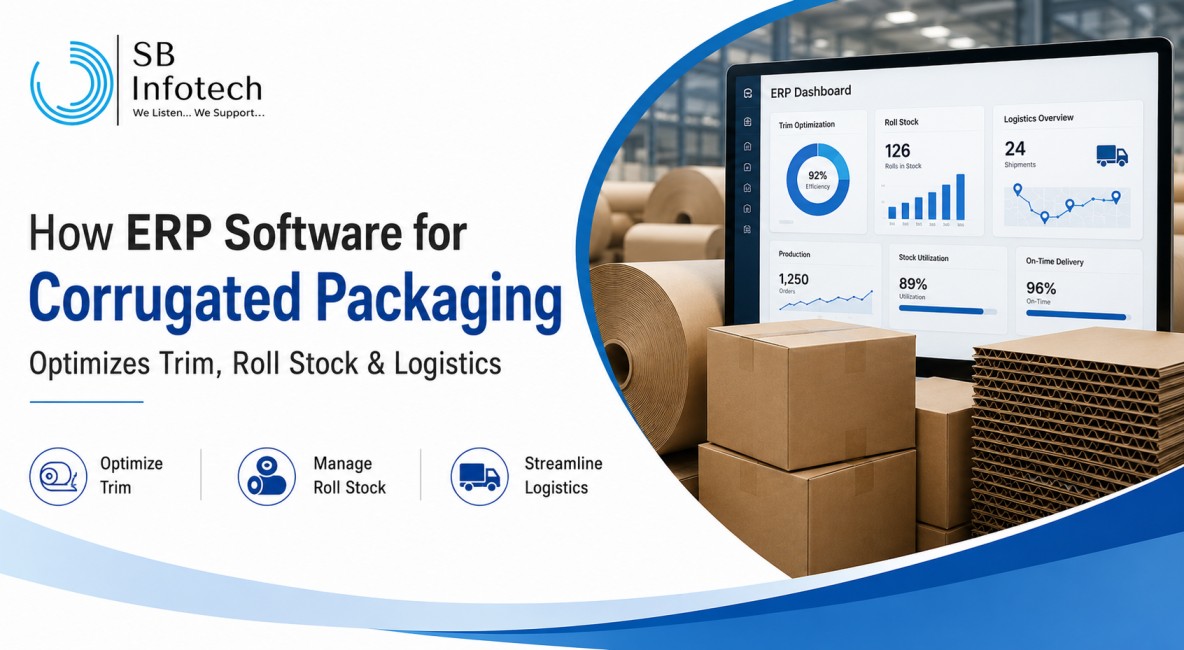
How ERP Software for Corrugated Packaging Optimizes Trim, Roll Stock & Logistics
Discover how ERP software for corrugated packaging optimizes trim, roll stock, inventory, production, and logistics to reduce waste and improve profitability.



In corrugation, small efficiencies create big profits. Most plant owners agree with this statement. But very few actually operate in a way that captures those efficiencies consistently. Why? Because day-to-day operations take over. Orders need to be processed. Machines need to run. Deliveries must go out. Payments need to be followed up. And somewhere between all this, profit quietly leaks out of the system. Not in one big mistake — but in hundreds of small, invisible inefficiencies. And that’s exactly where most corrugation businesses lose 15–30% of their potential profitability.
If you’re running a corrugation or packaging unit today, your operations likely depend on:
This setup works — until it doesn’t. Because the biggest losses in your plant are not obvious:
Individually, these don’t feel like major issues.
Collectively, they are the reason your margins don’t grow even when your revenue does.
Corrugation is operationally complex. You’re managing:
Without a connected system, three major problems show up:
You discover problems after they’ve already cost you money.
Sales, production, inventory, and finance operate in silos.
Working capital gets stuck in inventory and receivables. This isn’t a people problem. It’s a system problem.
A corrugation-specific ERP doesn’t just digitize your operations — it gives you control.
And the impact is not theoretical. It’s measurable:
Let’s break this down.
Paper accounts for 55–65% of your total cost. Even a small reduction in waste has a massive financial impact.
For example:
If your plant consumes ₹2 crore worth of paper monthly, a 2–5% reduction saves ₹4–10 lakh every month. With ERP, you get:
Instead of discovering wastage at month-end, you fix it on the shop floor, in real time.
Most plants don’t need new machines. They need better utilization of existing ones. The reality:
Your machines are often running at 70–80% efficiency due to:
An ERP system solves this by:
The result? More output — without investing in new machinery.
Many corrugation businesses focus on increasing orders. But here’s the uncomfortable truth: Not all orders are profitable. Without job-wise costing, you’re often:
ERP changes this completely. You get:
This allows you to:
Growth finally translates into actual profit.
Cash flow is one of the biggest constraints in manufacturing.
Money gets stuck in:
ERP improves this by:
The result?
More liquidity — without raising capital.
The biggest advantage of ERP is not individual features. It’s integration.
When your entire business runs on one system:
No duplication. No delays. No confusion. Just one version of truth across the organization.
Most plant owners spend their day reacting:
This is firefighting. And it consumes your time, energy, and focus.
ERP shifts you from reactive to proactive:
Instead of managing chaos, you start running a system.
Let’s take a mid-sized corrugation plant (200–250 MT/month).
The financial impact?₹15–25 lakh improvement in monthly profits. Not by working harder — but by working smarter.
Many businesses delay ERP implementation due to:
But here’s the real question:
How much are you losing every month without it?
Modern ERP solutions like CorrEx are:
You don’t need months to see results. You start seeing impact within weeks.
The industry is changing. The businesses that will lead are the ones that:
The rest will continue to:
The gap will only widen.
You don’t need a bigger plant to grow. You need a smarter one. Because in corrugation, profitability isn’t driven by scale alone —
it’s driven by control, visibility, and precision. And that’s exactly what the right ERP system delivers.
Discover how ERP software for corrugated packaging optimizes trim, roll stock, inventory, production, and logistics to reduce waste and improve profitability.
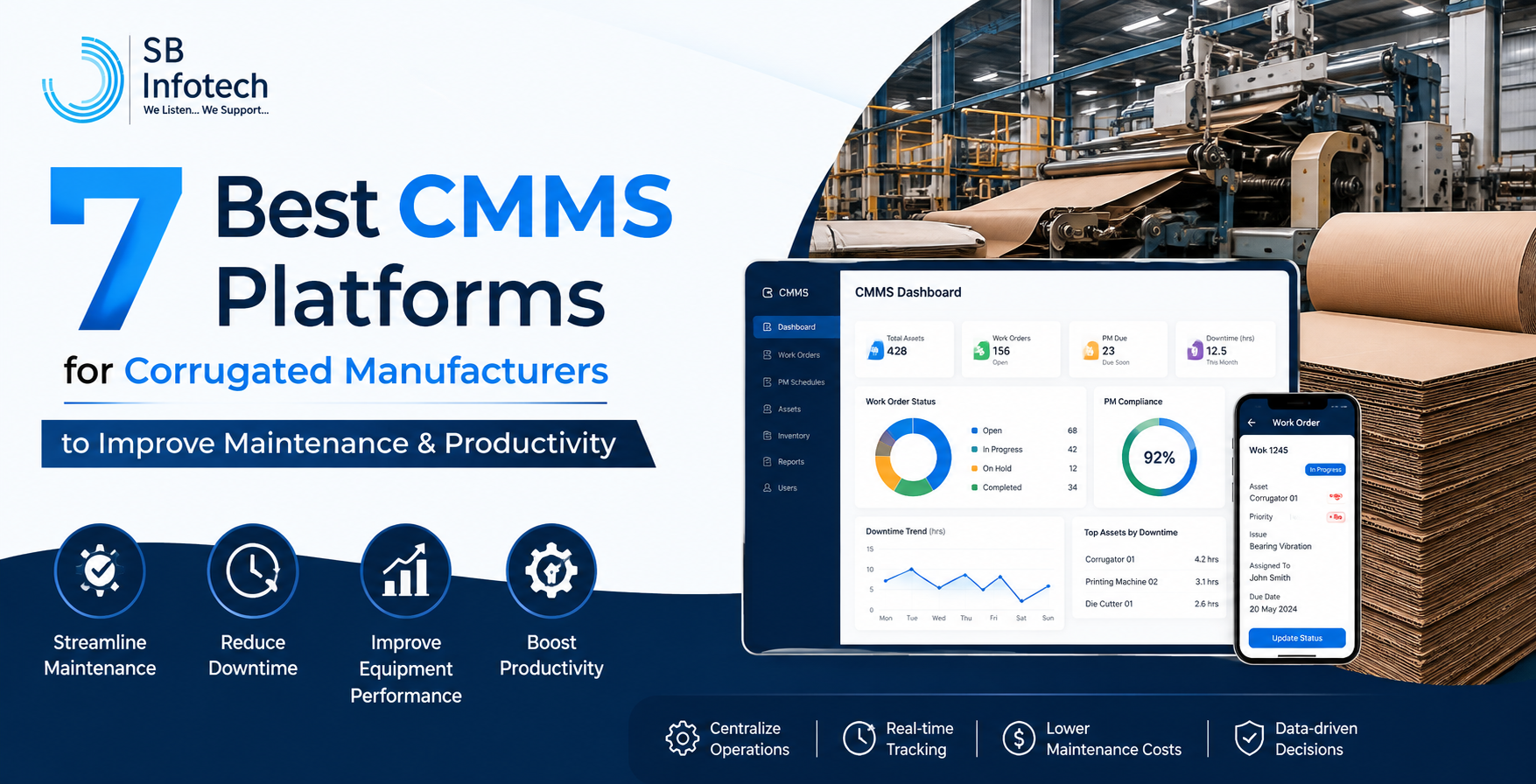
Discover the 7 best CMMS platforms for corrugated manufacturers to streamline maintenance, reduce downtime, improve equipment performance, and boost productivity.
WhatsApp us